Community-Centered Adaptation in Bududa's landslide prone communities in Eastern Uganda.
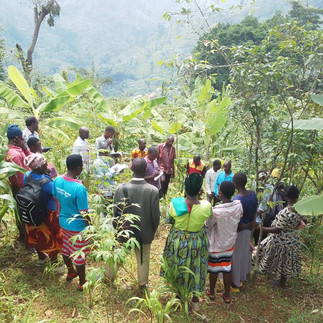
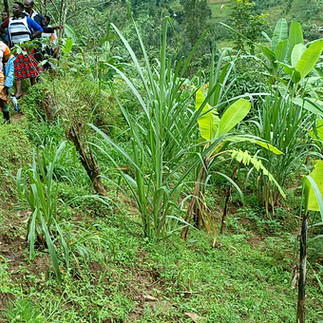
One of the key example of a successful community-centered adaptation plan comes from Bududa District in eastern Uganda, a mountainous area highly vulnerable to landslides, soil erosion, and unpredictable rainfall. One notable initiative is the Participatory Integrated Planning (PIP) approach implemented through a project called CommonGround in collaboration between researchers from Wageningen University and an NGO called ISSD. I personally was part of this program as an extension/field officer. This initiative focuses on helping local farmers design their own climate-adaptation strategies rather than imposing outside solutions.This initiative/project aimed at restoring resilience of Highland farming communities to climate disasters through improved farming systems, restoration and livelihood diversification. The plan was designed using participatory methods where community members first mapped their environment/landscape, identified major climate threats and impacts, and envisioned future goals and aspirations for their farms and households. This was done afternoon conducting thorough community awareness campaigns. After mapping, Field officers then provided training in practical adaptation techniques such as best Agronomic Practices, Sustainable Land use management such as intercropping, tree planting, cover cropping, striping, prunning, water-runoff trenches, and organic manure and pesticide, mulching etc as long as the practice was identified by the local farmers as the best solutions based on their local knowledge,and experience. The community members were encouraged to use the locally available resources such as labour, tools and others materials which they contributed themselves unless it was beyond their capabilities that's when the NGO supported. Because the solutions originated from residents themselves, the members collaborated implementation was faster and more sustainable. Besides individual household implementation, major activities such as landscape restoration, community road opening and constructing bridges was implemented collaboratively.
Evaluation Against Key Criteria
- Represents community values:
The planning process centered on local priorities, aspirations and indigenous knowledge. Farmers chose strategies that aligned with their traditions, land-use practices, and livelihood goals.
- Addresses challenges:
The interventions directly targeted Bududa’s major risks such as landslides, soil erosion, and erratic rainfall, ensuring relevance and effectiveness.
- Adequately assesses vulnerability:
The local farmers themselves identified erosion and landslide hotspots, fragile slopes, and vulnerable households. This local insight provided a more accurate assessment than external evaluations alone.
- Demonstrates conflict resolution:
Participatory meetings and awareness campaigns brought together diverse community members to discuss land use and resource allocation. They even established committes to spearhead the activities. This collaborative dialogue reduced tensions, encouraged ownership and shared responsibility.
- Meets community expectations and needs:
Farmers gained practical skills that improved crop yields and protected their land. Because the solutions were realistic and locally manageable, community satisfaction was high.
- Contributes to adaptive capacity:
The initiative strengthened long-term resilience by building knowledge, skills, and cooperation networks. Farmers now share techniques with neighbors, allowing adaptation practices to spread beyond the original participants.
Generally, this shows that community-centered adaptation works best when local people lead decision-making. In Bududa District, participatory planning not only addressed environmental risks but also empowered residents with ownership, confidence, and practical tools to cope with climate change as well as livelihood enhancement through agribusiness trainings. As a result, the project strengthened environmental resilience, economic resilience and social cohesion, making it a model for sustainable adaptation in vulnerable rural communities. Attached are some of the photos I took. They highlight some of the awareness campaigns, mapping sessions and practical trainings.